Plato’s dialogues, readily available as ‘5 dialogues Plato PDF’ resources, represent a cornerstone of Western philosophy․ These texts explore ethics, politics, and metaphysics․

PDF formats offer convenient access for students and scholars, enabling portable study and efficient research of these foundational works․
MuseScore Studio and similar software aid in analyzing these complex philosophical arguments presented within the dialogues․
What are Plato’s Dialogues?
Plato’s dialogues are a series of philosophical treatises written as conversations, primarily featuring his teacher, Socrates․ They aren’t simply recordings of discussions; rather, they are literary works crafted to explore fundamental questions about existence, knowledge, justice, and beauty․ Finding resources like a compilation of ‘5 dialogues Plato PDF’ allows for focused study․
These dialogues typically involve a dramatic setting and a cast of characters who debate various philosophical positions; PDF accessibility is crucial, as it enables detailed examination of arguments․ MuseScore Studio, while not directly related to textual analysis, exemplifies the tools available for in-depth study of complex materials․
Key dialogues often studied include The Republic, Apology, Crito, Phaedo, and Symposium – frequently sought after in PDF format for convenient access and annotation․
Significance of PDF Formats for Studying Plato
PDF formats dramatically enhance the study of Plato’s dialogues, particularly when focusing on collections like ‘5 dialogues Plato PDF’․ Their portability allows students and researchers to access these foundational texts anywhere, anytime, without requiring a physical library․
PDFs facilitate efficient searching for specific terms or arguments within the dialogues, a crucial feature when analyzing Plato’s complex philosophical ideas․ Annotation tools enable note-taking directly within the text, fostering deeper engagement and comprehension․
Furthermore, PDFs often preserve formatting and scholarly introductions, providing valuable context․ Software like MuseScore Studio, though for musical notation, highlights the benefit of digital tools for detailed analysis․ Accessing ‘5 dialogues Plato PDF’ streamlines research and promotes focused learning․

Key Dialogues Available in PDF Format
‘5 dialogues Plato PDF’ collections commonly include The Republic, Apology, Crito, Phaedo, and Symposium, offering accessible entry points into Plato’s core philosophical themes․
The Republic (PDF Availability & Importance)
The Republic, a central text within the ‘5 dialogues Plato PDF’ grouping, is widely available online through university archives and scholarly websites․ Its importance stems from its comprehensive exploration of justice, the ideal state, and the nature of the soul․
PDF accessibility allows for detailed study of Plato’s complex arguments concerning governance, education, and the philosopher-king․ Students can utilize search functions within PDF readers to quickly locate specific passages relating to key concepts like the Allegory of the Cave or the Theory of Forms․
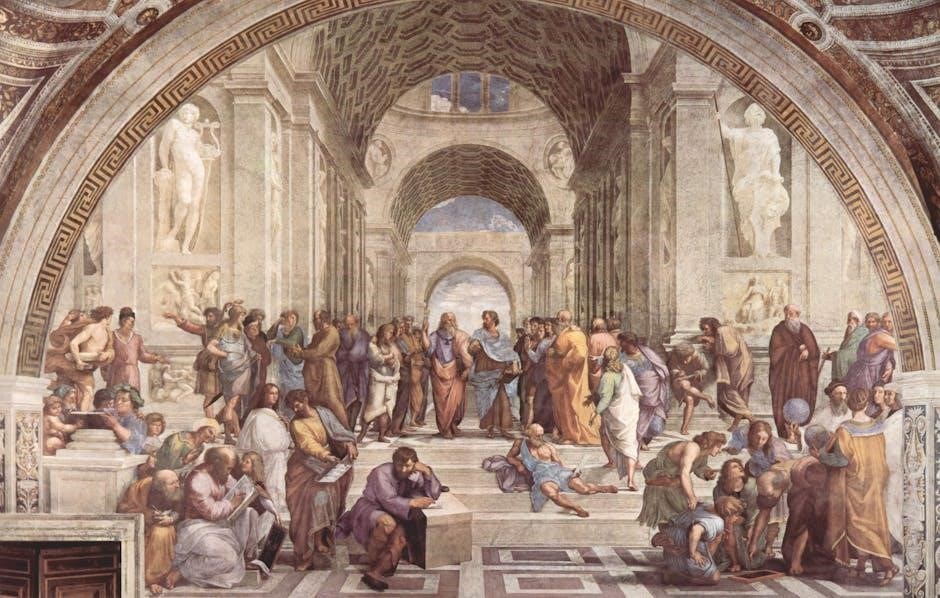
Furthermore, annotation tools facilitate note-taking and critical analysis․ The text’s enduring relevance to political philosophy and ethics makes it a crucial component of any study of classical thought, readily facilitated by convenient PDF access․
Apology (PDF Accessibility & Core Themes)
The Apology, frequently found within collections of ‘5 dialogues Plato PDF’, details Socrates’ defense speech during his trial․ Its accessibility in PDF format allows for close reading and analysis of his philosophical stance against the charges of impiety and corrupting the youth․
Core themes revolve around the importance of self-examination, the pursuit of wisdom, and the unwavering commitment to truth, even in the face of death․ PDF versions enable students to easily highlight key arguments concerning the Delphic Oracle and Socrates’ mission as a “gadfly․”
The text’s concise nature and dramatic presentation make it an ideal starting point for understanding Plato’s philosophical method and the life of Socrates․
Crito (PDF Versions & Ethical Considerations)
Crito, often included in ‘5 dialogues Plato PDF’ compilations, presents a compelling exploration of justice, law, and individual obligation․ Readily available PDF versions facilitate detailed study of Socrates’ reasoning for accepting his unjust sentence rather than escaping imprisonment․
The dialogue centers on a visit from Crito, who urges Socrates to flee, but Socrates argues that one must always obey just laws, even when wronged․ Ethical considerations regarding the social contract and the importance of upholding legal principles are central․
PDF accessibility allows for easy annotation and comparison of arguments, highlighting Socrates’ commitment to philosophical integrity and the rule of law․
Phaedo (PDF Resources & Focus on the Soul)
Phaedo, frequently found within ‘5 dialogues Plato PDF’ collections, delves into the nature of the soul and its immortality․ Accessible PDF resources enable focused examination of Socrates’ final hours before his execution, and his arguments for the soul’s continued existence after death․
The dialogue presents several proofs of immortality, including the argument from opposites and the theory of recollection․ Plato explores the relationship between the soul and the body, suggesting the soul is distinct and pre-exists bodily existence․
PDF formats allow for close reading and annotation, aiding comprehension of these complex metaphysical concepts and Socrates’ philosophical perspective․
Symposium (PDF Downloads & Exploration of Love)
Symposium, often included in ‘5 dialogues Plato PDF’ compilations, is a captivating exploration of love in its various forms․ Easily accessible PDF downloads facilitate study of the dialogue’s dramatic setting – a banquet where prominent Athenians deliver speeches on Eros (love)․

These speeches progress from physical attraction to philosophical contemplation, culminating in Socrates’ account of Diotima’s teachings on the ascent to the Form of Beauty․ Plato examines love as a desire for immortality and a pathway to higher knowledge․
PDF versions allow for detailed analysis of the rhetorical strategies and philosophical arguments presented, enhancing understanding of this influential work․

Finding Reliable ‘5 Dialogues Plato PDF’ Resources
Locating trustworthy ‘5 dialogues Plato PDF’ sources requires careful navigation․ University websites and established archives offer legitimate access to these texts․
Beware of copyright infringements when downloading PDFs; prioritize legal and scholarly platforms for reliable content․
Reputable Online Archives for Plato’s Works
Several online archives provide access to Plato’s dialogues, including options for downloading ‘5 dialogues Plato PDF’ versions․ The Perseus Digital Library, hosted by Tufts University, is a highly respected resource, offering Greek texts alongside English translations, often available as PDFs․
Project Gutenberg also features numerous public domain translations of Plato’s works, making them freely accessible in various digital formats, including PDF․ Internet Archive is another valuable source, archiving a wide range of digitized texts, including scholarly editions of Plato’s dialogues․
These archives generally prioritize accuracy and reliability, ensuring students and researchers have access to trustworthy versions of these foundational philosophical texts․ Always verify the translator and edition when utilizing these resources for academic purposes․
University and Scholarly Websites Offering PDFs
Many university websites and scholarly platforms host PDF versions of Plato’s dialogues, often as course materials or research resources․ Harvard University’s Classics Department and Yale University’s Philosophy Department frequently provide downloadable PDFs of key texts, including selections from the ‘5 dialogues Plato PDF’ collection․
The Online Library of Liberty, maintained by the Liberty Fund, offers a curated collection of classical texts, including Plato’s works, in PDF format․ Academia․edu and ResearchGate, while primarily platforms for sharing research papers, often contain links to or uploads of Plato’s dialogues in PDF․
These sources often provide accompanying scholarly notes or commentaries, enhancing the study experience․ Always check the website’s credibility and the source of the PDF before relying on its content․
Avoiding Copyright Issues When Downloading PDFs
When seeking ‘5 dialogues Plato PDF’ resources, be mindful of copyright restrictions․ Many older translations of Plato’s works are in the public domain, allowing free download and distribution․ However, newer translations and scholarly editions are typically protected by copyright․
Downloading copyrighted material without permission is illegal․ Prioritize sources like university websites or established online libraries (e․g․, the Online Library of Liberty) that offer legally accessible PDFs․
Always verify the source’s legitimacy and licensing terms before downloading․ If a PDF is offered on a less reputable site, consider purchasing a legitimate copy to support the translator and publisher․ Respecting copyright ensures continued access to these vital philosophical texts․

Understanding the Structure of Plato’s Dialogues
Plato’s dialogues, often found as ‘5 dialogues Plato PDF’ downloads, employ a unique structure․ They feature dramatic scenes and Socratic questioning․
Characters engage in philosophical debate, revealing complex ideas through conversation and argument, enhancing comprehension via PDF study․
Socratic Method in Dialogue Format
Plato’s masterful use of the Socratic method within his dialogues, easily accessible as ‘5 dialogues Plato PDF’ collections, is central to understanding his philosophy․ This method doesn’t present definitive answers but instead employs rigorous questioning․
Socrates, the primary speaker, challenges assumptions and exposes contradictions in the beliefs of his interlocutors․ This process of elenchus, or cross-examination, aims to stimulate critical thinking and pursue deeper understanding of concepts like justice, beauty, and truth․
The dialogue format itself is crucial; it’s not a monologue but a dynamic exchange․ Studying these dialogues in PDF form allows for close reading and annotation of these intricate arguments, revealing the nuances of Socrates’ approach and the evolution of thought within each conversation․
This interactive style encourages readers to actively participate in the philosophical inquiry․
Roles of Characters in Plato’s Dialogues
Within Plato’s dialogues, readily available as ‘5 dialogues Plato PDF’ downloads, characters aren’t merely placeholders but embody distinct perspectives and philosophical stances․ Socrates consistently serves as the central figure, probing beliefs and guiding the conversation․
However, other characters – like Glaucon and Adeimantus in The Republic – represent various viewpoints, challenging Socrates and forcing him to refine his arguments․ These interactions aren’t random; they’re carefully constructed to explore the complexities of each topic․
Analyzing these roles within a PDF version allows for tracking character development and identifying the specific arguments each character champions․ Understanding these dynamics is crucial for interpreting Plato’s philosophical intentions and appreciating the richness of his dialogues․
Each character contributes to the overall philosophical exploration․
Common Themes Across Multiple Dialogues
Examining Plato’s dialogues – easily accessible as ‘5 dialogues Plato PDF’ collections – reveals recurring philosophical themes woven throughout his work․ Justice, ethics, and the pursuit of knowledge are central concerns, appearing in works like The Republic, Apology, and Crito․
The concept of the ideal state, explored extensively in The Republic, echoes in discussions of individual virtue found in other dialogues․ Similarly, Socrates’ defense of his philosophical life in the Apology resonates with the ethical considerations presented in Crito․
Studying these dialogues in PDF format facilitates cross-referencing, allowing readers to trace the evolution of Plato’s thought and identify the interconnectedness of his ideas․ Recognizing these common threads enhances comprehension․

Analyzing Plato’s ‘5 Dialogues’ – Common Topics
‘5 dialogues Plato PDF’ resources reveal consistent exploration of justice, ethics, and knowledge․ These core topics drive philosophical inquiry across his influential works․
PDF access aids comparative analysis of these recurring themes within Plato’s dialogues․
Justice and the Ideal State
Plato’s exploration of justice, particularly within the ‘5 dialogues Plato PDF’ collection, is central to understanding his political philosophy․ The Republic, frequently available in PDF format, dedicates significant attention to defining justice, both in the individual and within the state․
He posits an ideal state structured around a hierarchical society – rulers (philosopher-kings), auxiliaries (soldiers), and producers – where each class fulfills its role harmoniously, achieving societal justice․ This concept is intricately linked to his theory of Forms, suggesting true justice exists as an abstract ideal․
Analyzing PDF versions allows for close reading of Socrates’ arguments and challenges to conventional notions of justice, revealing Plato’s vision for a just and well-ordered society․ Other dialogues, like Crito, further illuminate the importance of upholding just laws, even in the face of personal adversity․
Ethics and Moral Philosophy
Plato’s ethical and moral philosophy, accessible through resources like ‘5 dialogues Plato PDF’ downloads, centers on the pursuit of the “Good Life․” Apology, often found in PDF form, exemplifies Socrates’ commitment to virtue and moral integrity, even in the face of death․ He prioritizes self-examination and the pursuit of wisdom over material possessions or public opinion․
Phaedo, also readily available as a PDF, delves into the immortality of the soul and its connection to ethical conduct, arguing that a virtuous life prepares the soul for its afterlife․ Plato emphasizes that true happiness stems from inner harmony and moral excellence․
Studying these PDF texts reveals Plato’s belief that knowledge of the Good is essential for ethical behavior, guiding individuals towards a life of virtue and fulfillment․
Knowledge and the Theory of Forms
Plato’s Theory of Forms, a central tenet of his epistemology, is profoundly explored within dialogues accessible as ‘5 dialogues Plato PDF’ resources․ The Republic, frequently available in PDF format, vividly illustrates this theory through the Allegory of the Cave, contrasting perceived reality with true knowledge of the Forms․
These Forms—perfect, eternal archetypes—represent the ultimate objects of knowledge․ Phaedo, also obtainable as a PDF, connects the Theory of Forms to the soul’s pre-existence and its capacity to grasp these eternal truths․
Analyzing these PDF texts reveals Plato’s conviction that genuine knowledge transcends sensory experience, requiring intellectual ascent to comprehend the Forms and attain true understanding․

Utilizing PDF Features for Enhanced Study
‘5 dialogues Plato PDF’ versions empower students with search functions, annotation tools, and potential hyperlinks․ These features facilitate deeper engagement and analysis․
MuseScore Studio can complement PDF study, aiding comprehension of complex arguments within Plato’s works․
Search Functionality within PDFs
Utilizing the search functionality within ‘5 dialogues Plato PDF’ documents is paramount for efficient study․ Plato’s dialogues are dense with philosophical concepts and recurring themes, making targeted searches invaluable․
Students can quickly locate specific passages relating to justice, the soul, or the Theory of Forms, accelerating comprehension․ Searching for keywords like “Socrates,” “ideal state,” or “knowledge” pinpoints relevant discussions․
This feature bypasses the need for exhaustive reading, allowing focused analysis of key arguments․ Furthermore, searching for specific terms in different dialogues reveals Plato’s evolving thought․ PDF readers often support advanced search options, like case sensitivity and whole-word matching, refining results․ MuseScore Studio, while not directly related to PDF searching, can aid in understanding the context of philosophical ideas․
Annotation Tools for Note-Taking
When studying ‘5 dialogues Plato PDF’ versions, annotation tools are essential for active learning․ PDF readers allow highlighting key passages, adding sticky notes, and underlining important arguments within Plato’s texts․
Students can record their interpretations, questions, and connections to other philosophical concepts directly onto the document․ This fosters deeper engagement and critical thinking․ Different colored highlights can categorize themes – ethics, politics, epistemology․
Annotation facilitates revisiting and synthesizing information, creating a personalized study guide․ MuseScore Studio, though focused on music notation, exemplifies the benefit of interactive tools․ These tools transform static PDFs into dynamic learning resources, enhancing comprehension of Plato’s complex ideas and arguments․
Hyperlinks to External Resources (if available in PDF)
Some ‘5 dialogues Plato PDF’ versions may include hyperlinks to external resources, enriching the study experience․ These links can connect readers to scholarly articles, commentaries, and related philosophical texts, offering deeper context․
Hyperlinks might lead to definitions of key terms, biographical information about Plato, or analyses of specific arguments within the dialogues․ This allows for immediate exploration of concepts and facilitates a more comprehensive understanding․
While not universally present, these embedded links are invaluable when available․ MuseScore Studio, though not directly related, demonstrates the power of interconnected digital resources․ Utilizing these hyperlinks transforms the PDF from a static document into a gateway for further research and learning․

Advanced Study Resources for Plato’s Dialogues
Scholarly articles and commentaries, often found as PDF links, deepen understanding of the ‘5 dialogues Plato PDF’․ Online forums foster discussion․
Further reading, including books and additional PDF resources, expands knowledge of Plato’s complex philosophical ideas․
Scholarly Articles and Commentaries (PDF links)
Delving deeper into Plato’s ‘5 dialogues Plato PDF’ requires accessing robust scholarly resources․ Numerous academic journals offer articles analyzing specific passages and overarching themes within works like The Republic, Apology, Crito, Phaedo, and Symposium․
JSTOR, Project MUSE, and university library databases frequently host these articles as downloadable PDF files․ Look for commentaries by prominent Platonic scholars, providing contextual insights and interpretations․ These resources illuminate the historical, philosophical, and literary nuances of the dialogues․
Specifically, searching for articles focusing on the Socratic method, the Theory of Forms, or Platonic ethics will yield valuable results․ Many universities also provide open-access PDFs of dissertations and theses dedicated to Plato’s works, offering in-depth analysis․
Online Forums and Discussion Groups
Engaging with other readers enhances understanding of Plato’s ‘5 dialogues Plato PDF’․ Online forums and discussion groups provide platforms for sharing interpretations, posing questions, and debating complex philosophical concepts presented in texts like The Republic and Symposium․
Reddit’s r/philosophy and dedicated Plato subreddits are excellent starting points․ Stack Exchange’s Philosophy section offers a question-and-answer format for specific inquiries․ These communities foster collaborative learning and diverse perspectives․
Furthermore, many universities host online discussion boards alongside their Plato courses, sometimes publicly accessible․ Participating in these forums allows you to refine your own understanding and benefit from the insights of scholars and fellow enthusiasts studying the same PDF resources․
Further Reading Recommendations (books, PDFs)
Expanding beyond the core ‘5 dialogues Plato PDF’ requires supplementary resources․ For introductory overviews, consider Bloom’s The Republic or Grube’s translations of several dialogues․ These provide valuable context and interpretations․
offer deeper analysis․ Online, the Internet Archive hosts numerous digitized books and commentaries related to Plato’s works, often available as PDF downloads․
Additionally, explore resources from university websites offering course materials and lecture notes․ Websites like Project Gutenberg provide free ebooks of classic philosophical texts․ Remember to critically evaluate sources and cross-reference information for a comprehensive understanding of Plato’s philosophy․